
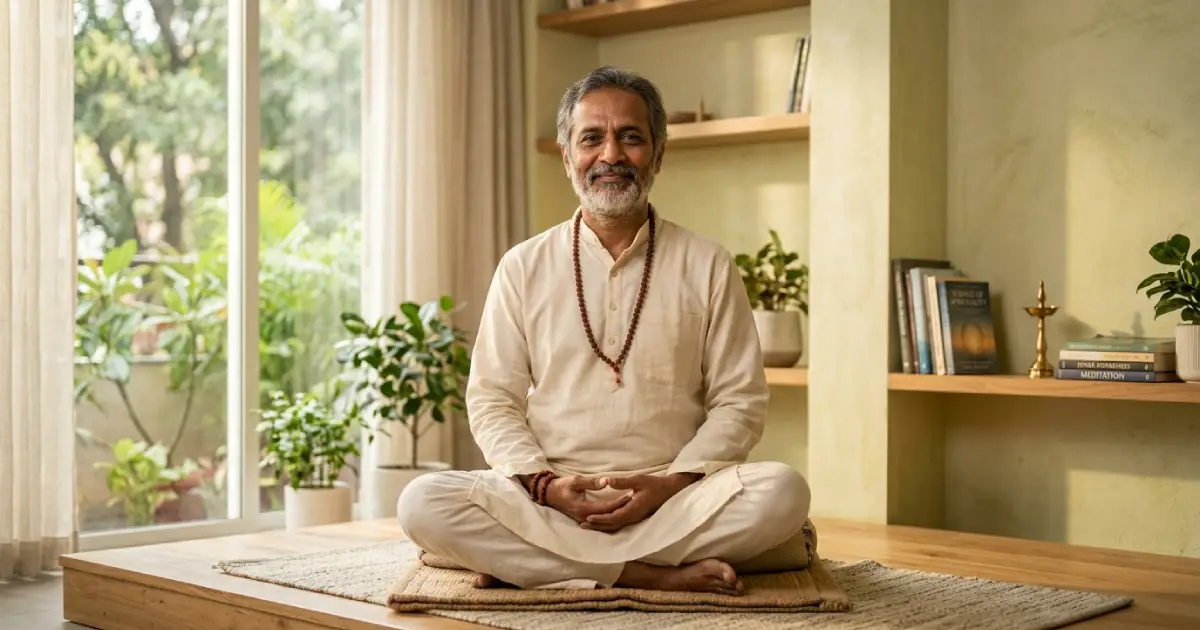
Life often feels automatic. Then awareness wakes up.
A deeper layer of this quality — what older teachings simply name Awareness — begins to change how ordinary moments land. Colors look sharper. Reactions slow down. Choices feel like your own again.
Santosh Buddha speaks about exactly this shift during his conversations on the science of spirituality. He shows how steady inner observation turns vague spiritual ideas into something measurable and practical. People who stay with the process report less mental noise, stronger relationships, and a quiet confidence that no amount of external achievement quite matches.
What the Science of Spirituality Actually Means
The science of spirituality works like an inner laboratory. You try something, You watch what happens. You keep what proves useful.
Modern studies back the approach. Regular practitioners show lower cortisol, steadier moods, and measurable growth in brain areas tied to focus and compassion. Santosh Buddha keeps the explanation grounded. Spirituality becomes scientific the moment curiosity replaces belief. You test a method against your own experience and adjust.
Most education adds information. This field changes the one who receives the information. That difference is where transformation starts.
Awareness: The Steady Witness Behind Daily Life
Awareness is not another thought. It is the clear space in which thoughts and feelings appear. When it strengthens, identification loosens. You still feel emotions, yet you no longer become them so quickly.
Santosh Buddha often uses something simple to illustrate the point. Open your eyes outdoors. Let attention rest on the trees or sky without rushing to name or judge. That single act of resting is already meditation. The same principle applies when attention stays with the breath or a single object. The mind learns to remain present instead of scattering.
Small moments reveal the difference. A driver cuts you off. The old flash of anger rises — then passes without taking over the rest of the drive. A difficult email arrives. You notice the tightening in your chest before you answer. These tiny gaps between stimulus and response grow wider with practice. Life stops feeling like something that happens to you. It becomes something you meet.
How Awareness Changes the Way Life Actually Feels
Benefits appear across every layer once Awareness takes root. They rarely arrive in dramatic waves. They accumulate through ordinary days.
Mental and emotional steadiness comes first. The background commentary loses volume. Research on mindfulness practices shows consistent drops in anxiety for many people. You name feelings earlier, so they rarely escalate into storms.
Physical health responds next. Unconscious tension drains energy and disrupts sleep. As awareness grows, many people notice deeper rest and fewer stress-related aches. The body simply follows the calmer signals coming from the mind.
Relationships shift because presence replaces defensiveness. You hear what is actually said instead of preparing your defense. Blame decreases. Connection deepens.
Work performance improves for the same underlying reason. Decisions carry less emotional charge. Focus holds longer. Recovery after setbacks happens faster because mental loops lose their grip.
Limits remain honest. Early weeks can feel more sensitive as old patterns surface. That sensitivity is information, not failure. The mind sometimes resists new habits because familiar discomfort feels safer than unknown freedom. Patience and consistency matter more than intensity. Awareness never promises a pain-free life. It changes how pain is carried.
Must Read: The 111 Breaths Manifestation Technique: Your Path to Divine Transformation
Simple Techniques That Build Awareness
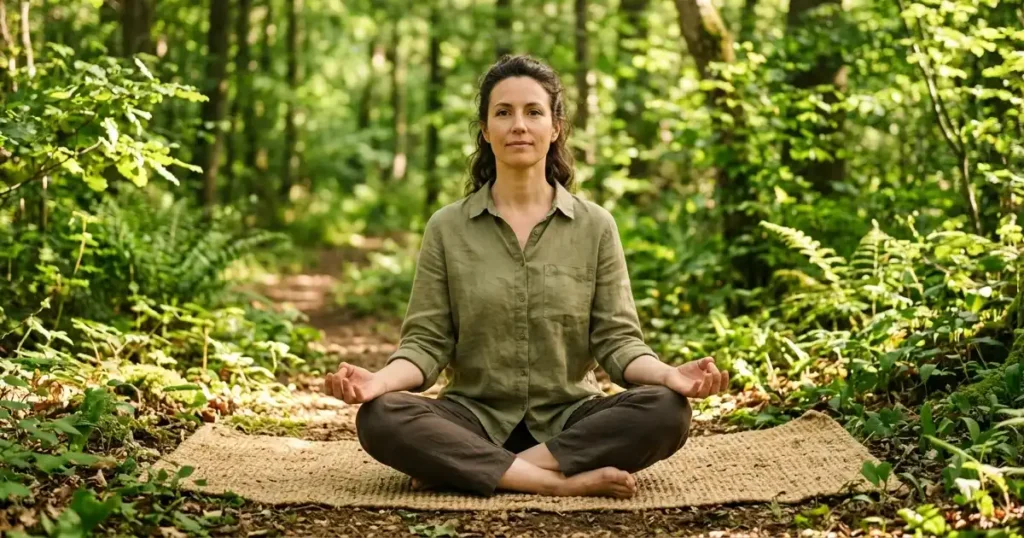
The science of spirituality favors methods anyone can test without special equipment or long retreats.
Breath awareness remains the most reliable starting point. Sit with a relaxed but upright spine. Notice the air moving at the nostrils or the gentle lift of the belly. When attention drifts — and it will — notice the drift and return. Five minutes daily creates momentum. Longer sessions become natural later.
Nature meditation with eyes open works beautifully for people who find closed-eye practice restless. Sit or stand outdoors. Let attention rest on whatever is visible — light on leaves, movement of branches, color of sky. No commentary required. Many discover this version feels effortless and refreshing.
Self-inquiry fits anywhere. During a walk or between meetings, ask softly: “Who is aware right now?” The question is not seeking words. It simply shifts you into the observing position. These brief pauses, repeated often, strengthen the same capacity as formal sitting.
A slow body scan adds precision. Move attention through different regions without trying to relax or change anything. You begin to feel emotions in the body before they become stories in the mind.
Track progress lightly. A short note after each session — duration and one observation — reveals patterns within weeks. Consistency always outperforms occasional long efforts.
Karma, the Soul, and What Awareness Reveals

Conversations on the science of spirituality frequently touch karma and the soul because direct seeing makes both clearer. Karma operates as simple cause and effect. Repeated thoughts and actions carve grooves. Those grooves shape future experience.
Stronger Awareness lets you watch grooves forming while they are still shallow. You see how anger calls in more situations that trigger anger. You also see that you can interrupt the pattern in the present. Responsibility replaces blame.
The soul appears as the awareness that stays steady while everything else moves. Practices that develop Awareness gradually soften the feeling of being cut off from life. Individuality remains, yet it feels like one expression within a larger whole.
Santosh Buddha connects these ideas to observable reality — nature’s rhythms, the mind’s habits, the results of small consistent shifts over time.
Making Awareness Part of Real Life
No dramatic schedule changes are required. The science of spirituality integrates best when it rides alongside existing routines.
Begin the day with five minutes of breath or open-eye nature awareness before screens. Use waiting moments for quick self-inquiry. Before important conversations, pause for three conscious breaths. Evening review can be gentle — simply notice what triggered strong reactions and whether awareness was present.
Support the process with basics that already help stability: movement, decent food, real connection, and sleep. These are not side activities. They give awareness the physical ground it needs.
Skeptical minds can run the experiment cleanly. Forty days of steady practice. Objective tracking. Sleep quality. Frequency of reactive episodes. Overall sense of balance. Most people register clear movement well before the period ends.
Practical Questions and Honest Limits
Does the science of spirituality conflict with science or religion? Not when approached openly. Many keep their faith traditions and simply add contemplative tools. Others arrive with no religious framework and value the testable, non-dogmatic methods. The practices themselves remain available to anyone.
People managing trauma, clinical anxiety, or depression usually benefit most when these techniques support professional care. A skilled therapist can help adapt the work. Awareness often makes therapy more effective by increasing capacity to stay present with difficult material.
Cultural background matters. The term Awareness carries roots in specific traditions, yet the human ability to see clearly belongs to no single culture. You can use the methods without adopting elements that do not fit your life.
What Actual Change Looks and Feels Like

People who continue with these principles describe steady, quiet revolutions. An executive who once lived in constant urgency begins making decisions with less internal pressure. A parent watches patience arise naturally during a child’s difficult moment instead of forcing it. Someone moving through grief finds sorrow still present but no longer filling every corner.
None of these shifts arrive through one dramatic event. They form from thousands of small returns — back to the breath, back to noticing without feeding the story, back to resting attention on what is actually here. In a time of constant distraction, this capacity may be among the most useful skills anyone can develop.
Santosh Buddha’s discussions on platforms like BS Talk Show remove unnecessary mystery. Growth through awareness stays available to anyone willing to look inward with honesty and keep returning.
Final Perspective
The science of spirituality offers a clear, grounded route toward the quality of life many people sense is possible yet rarely reach through conventional effort alone. Cultivating Awareness gives you the ability to respond rather than react, to choose with greater clarity, and to experience deeper connection with yourself and the world around you.
The methods stay simple. The effects compound when practice becomes steady. Begin with breath awareness, nature meditation, or brief self-inquiry. Any path strengthens the same underlying capacity. Life may never become effortless, yet it becomes more alive, more meaningful, and more genuinely your own.
Start with five minutes. Notice what happens. Continue. The awareness you build will keep working.
FAQ
What is Awareness and how does it relate to the science of spirituality?
Awareness is the steady witnessing consciousness that observes thoughts and feelings without becoming them. In the science of spirituality it emerges through consistent inner observation and meditation. It is not reserved for special people. It develops through repeatable techniques anyone can test and refine, much like strengthening any skill through deliberate practice.
Can developing spiritual awareness really change my daily life and habits?
Yes, and the changes tend to be practical rather than dramatic. Heightened awareness creates space between trigger and response. Reactivity drops. Emotional steadiness increases. Many people notice clearer decisions, better sleep, and easier relationships within the first few weeks of consistent practice. Deeper shifts continue unfolding over months.
What are the easiest meditation techniques for beginners to increase awareness?
Three reliable entry points exist. Breath awareness: sit comfortably and gently follow the natural movement of breathing, returning when the mind wanders. Open-eye nature meditation: rest attention on actual visual surroundings without analysis or commentary. Brief self-inquiry pauses: ask inwardly during the day, “Who is aware right now?” All three require no special setup and fit into ordinary schedules.
How does the science of spirituality explain karma and the soul?
Karma functions here as natural cause and effect. Thoughts and actions create patterns that shape future experience. As Awareness develops, you see these patterns forming and gain the ability to change them in the present moment. The soul or deeper self appears as the steady awareness that remains unchanged while everything else moves and changes. Both become lived understanding through direct observation.
Is the science of spirituality suitable for busy professionals or complete beginners with no prior experience?
It suits both groups well. The focus stays on small, consistent actions rather than major lifestyle overhauls. Busy professionals often gain the most because awareness reduces time lost to mental spinning and unnecessary reactivity. Beginners can start with five minutes daily using breath focus or simple nature observation. No special background is required — only willingness to experiment and notice results.