
A simple idea someone taught me long ago has shaped my views on life, breathing, and spirituality. I was searching for answers like most others. Reading, listening spiritual speeches, and experimenting with meditation were my activities. Everything seemed hard.
An elderly spiritual teacher said something simple one day. He adds “You will understand life if you understand your breath.” At first, it seemed too easy. But when he mentioned Ek Onkar and Swara Yoga, something clicked.
This Article isn’t textbook-like. Like someone told me, I’ll explain everything I learned and experienced.
Meaning of Ek Onkar?
Many religions believe Ek Onkar is a spiritual truth. It is both profound and simple to comprehend. Ek “signifies one.” The divine creative vibration that created the universe is “Onkar“.
Ek Onkar implies that God and His creations are one. They’re identical.
Many believe God is outside the universe. But Ek Onkar’s wisdom says otherwise. It states the Creator and created are one. Creation is inside the Creator.
Trees, rivers, stars, people, and animals are all part of that divine reality.
Advaita means “non-duality” or “unity of being.“
Old Wisdom Remains True
A famous Vedic proverb states: My name is Brahmasmi.
It signifies “I am Brahman,” or “the divine consciousness is within me.”
This idea didn’t click the first time. It seemed like someone was claiming to be God. Actually, it signifies something else.
Really, it means:
Something remains if you lose your name, identity, employment, memories, and tales. That subtle “I exist” remains.
Ancient sages called consciousness Brahman.
Everlasting Consciousness
This inner understanding is remarkable since it never changes.
- Our bodies alter.
- Our thoughts change.
- Our emotions change.
- Our beliefs change.
The sensation of “I’m here” remains.
You knew that as a kid. It exists presently. You’ll always remember it.
Spiritual traditions suggest this consciousness predates time.
Truth is constant. Our inner mind remains constant despite our changing environment.
The goal of spirituality is inner peace.
The Global Sacred Sound Language
Why Spiritual Mantras Sound Certain
I also learned that sacred chants are not random phrases. Mantras were used in many ancient spiritual systems to modify the body and mind.
Some call the “mystical” or “symbolic” language used in spiritual chanting Sadhubhasha or Sandhya Bhasha. Hindi, Punjabi, Bengali, Marathi, and other words are in it.
The goal goes beyond talking. Noises alter our energies.
These vibrations may assist the body balance air, fire, water, earth, and space.
Nada Yoga: Sound Science
Sound Does More Than We Think
Nada Yoga, an ancient science, argues sound is more than hearing. Sound can affect our bodies, minds, and emotions.
Have you noticed how some music makes you feel better immediately? Or how loud noises might stress you?
Mantras work similarly but are more focused and deep.
How Ek Onkar Mantra Works in the Body
Spiritual people don’t merely say Ek Onkar. They make the sound internally.
Some teachers say:
Saying “Ek.” vibrates the navel core.
The vibration moves toward the third eye when you say “Om.”
When you say “Kar,” the heart core vibrates.
This generates a slight sound inside the body.
People who do this everyday say their mind, brain, and body feel calmer, relaxed, and more energetic.
Why Speech Control Matters
Another surprise was how powerful speaking is.
Many spiritual masters say talking too much drains our energy.
Think about it.
The mind keeps engaged when the tongue moves constantly. When our ideas are continually moving, our actions become restless.
This is why many spiritual traditions emphasize prayer, stillness, or mantras.
Reciting with the tongue on the upper palate is called Khechari Mudra. This pose is said to awaken certain energies and ease the mind in several yoga systems.
Secret Meaning of Wahe Guru Mantra
Wahe Guru is a profound mantra.
All sounds relate to one of the five elements.
Va means water.
He is space.
The earth element is Gu.
Ru symbolizes fire.
Repeating these sounds rhythmically is thought to balance the body’s elemental energy.
Many think mantra meditation makes them more steady, clear-headed, and even changes their personality.
It’s not magic. It gradually changes our thoughts and actions.
What “Had” and “Anhad” Mean
Many spiritual teachings discuss two states of experience.
First, Had means something we can see, hear, touch, taste, or smell. This encompasses sight, sound, touch, smell, and taste.
Anhad is another “beyond the senses.” experience.
In anhad, sound and listener merge.
The observer and observed are one in this situation.
Duality exists when two exist. Where duality exists, delusion may follow.
This is true if there is only one.
The Real Breath Secret
Why Breathing Changes Emotions
Many people today experience anxiety, stress, and emotional issues. Interesting, many spiritual systems say breathing patterns are the main culprit.
The average person breathes 16 times every minute.
Faster breathing increases anxiety.
Calmer, deeper breathing soothes the mind.
Some instructors say strong emotions can cause respiratory difficulties.
Managing our breath might affect our mood.
Breath Teaches
Guru Nanak named breath “Pavan Guru,” meaning “Breath is the Guru” in Sikh teachings.
Much thinking went into that idea.
We always breathe. Breath is with us from birth to death.
Most don’t notice it.
Straight-Spine Strength and Breathing Awareness
Many teachers instruct students to accomplish this simple task:
Sit with a straight back.
Though little, it makes a big effect.
Straightening the spine improves nervous system function and mental alertness.
A teacher said it well:
When the spine is straight, the mind aligns.
Straight thinking improves life.
Breath Retention Practice
Yoga calls holding breath “internal kumbhaka.”
Some practitioners believe that softly holding your breath makes you more alive, clear, and strong.
Holding your breath after exhaling is supposed to help the mind let go of physical boundaries.
These abilities should be learned slowly and with guidance.
Breath and Spirituality
Old yogic writings describe breath as far from the body.
For instance:
A person stays calm and happy if they breathe about 10 finger lengths.
Some cultures think that slight breath, around two finger lengths, strengthens and focuses speech.
If breath is exceedingly gentle, almost gone, deep meditation occurs.
Shunya Samadhi, or complete stillness, may occur when the breath becomes so tranquil in the deepest stage.
The Three Practice Stages
Some teachers simplify spiritual practice into three steps.
1. Watching Breath
First, observe your breath without changing it.
This alone relaxes you much.
2. Remembering Internal Sound
Step two is silently repeating a mantra while breathing.
It helps you concentrate.
3. Blending Breath and Sound
The breath and mantra seem to move together naturally.
Right now, meditation is easy.
Meditation to Heal Life
We all face daily issues, stress, tasks, and surprises.
Meditation takes time to fix issues. Our approach to them changes.
When you focus on your breath again, something interesting happens.
We look at the problem instead of getting stuck.
Little changes provide you inner freedom.
We become witnesses, not victims.
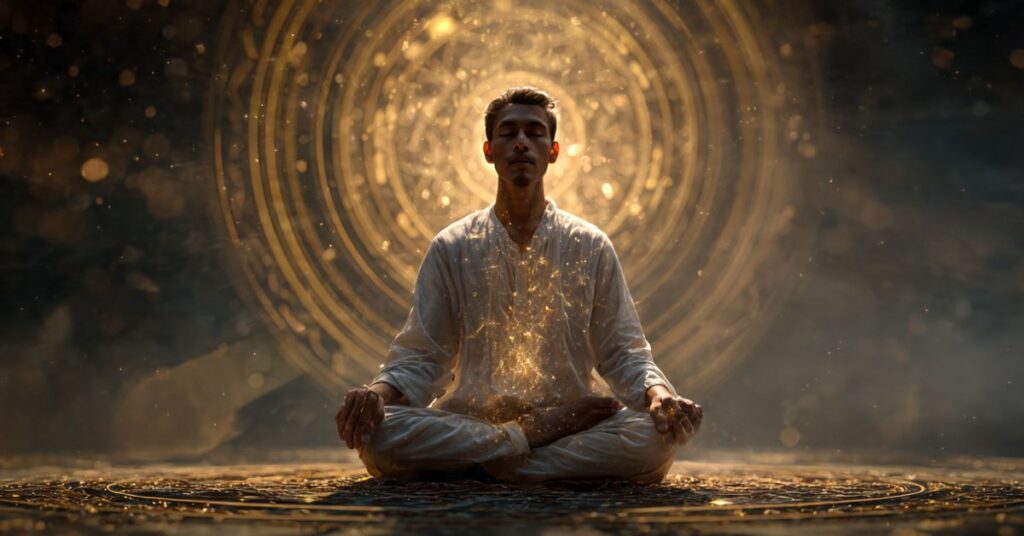
Questions Start Spiritual Journeys
Many turn to spirituality for answers.
Some seek solutions in science, psychology, or schoolwork. These paths might help you understand but also muddle your thoughts.
Ancient spiritual understanding often promotes simplicity.
One smart person’s advice can change your life.
Why Ancient Wisdom Matters
Many old Indian spiritual practices were quietly dying off.
Monks, yogis, and spiritual gurus preserved and shared this information.
They intended to help people see life’s bigger truth, not build a religion.
The Vedas and Upanishads were not for smart people only. They were developed for those who desire to understand.
Meaning Your Spiritual Practice is Working
This is intriguing proof of spiritual growth:
Formerly huge things become little.
Though life throws us curveballs, we get better at handling them.
This change indicates mental lightness.
The Meaning of Dharma
Dharma is often conceptualized as rules or practices.
On a deeper level, Dharma is letting go of mental baggage.
Dharma encourages us to find inner calm rather than hold onto many self-stories.
Mind silence brings clarity.
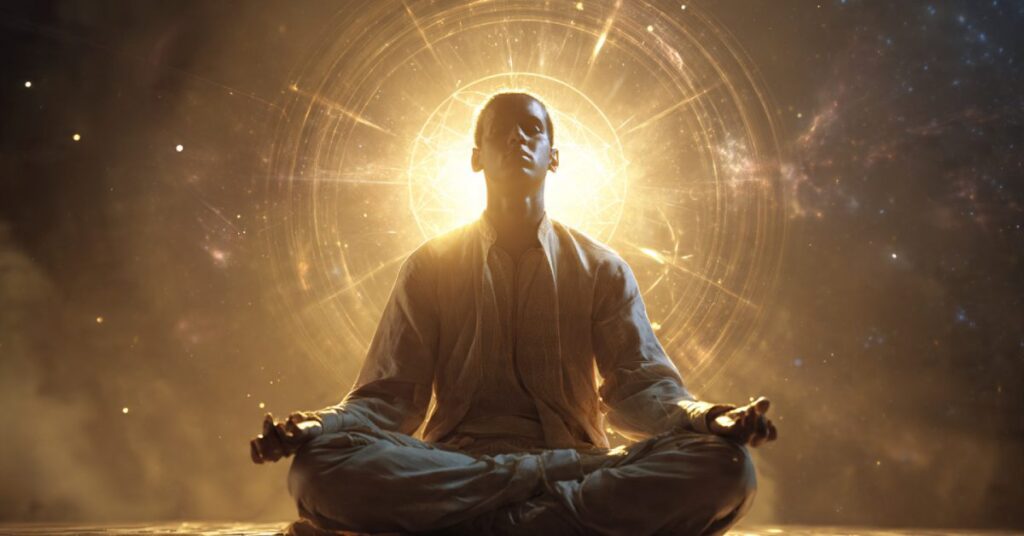
One Breath Unites Us
One last thought stirred me.
My breath becomes mine.
Breathing it in makes it your breath.
That breath belongs to everyone before we breathe it.
It rejoins the universal flow after leaving our body.
Thus, all living things share a life force.
Ek Onkar is about it.
Some Final Thoughts
Understanding breath, sound, and inner consciousness may seem spiritual, yet it’s useful.
Breathing affects emotions.
Sound affects our minds.
Awareness alters our behavior.
Being aware of these simple things slowly changes our lives.
The goal is to understand how we are connected to the cosmos, not to escape it.
Sometimes all it takes is one mindful breath to gain understanding.
FAQ (Frequently Asked Questions)
Meaning of Ek Onkar?
Ek Onkar means “One Supreme Reality.” It proves God and creation are one. All creation comes from one God.
How is Ek Onkar spiritual?
Ek Onkar promotes unity and nonduality. Everyone has heavenly consciousness, it says. Understanding this fosters peace, connection, and less ego or identity division.
What’s Swara Yoga?
Ancient yogic science Swara Yoga examines breath and its effects on body and mind. Breathing awareness and control affect emotions, thoughts, and well-being.
Why is spiritual breath important?
Mind and breath are connected. Quick or uneven breathing causes restlessness. Deep, slow breathing relaxes thought. This is why many meditations emphasize breathing.
Meaning of “Pavan Guru”?
Pavan Guru means “Breath is the Guru.” This implies that breath can calm and awaken us. Observing breath helps us understand emotions and thoughts.
How does mantra chanting effect mind and body?
Nada Yoga suggests sound vibrations alter nerves and energy centers. Practice a mantra to relax, focus, and balance emotions.
What makes the Wahe Guru mantra important?
Wahe Guru mantra vibrations are said to encompass the five elements. It balances body energy and brings inner harmony when chanted carefully.
Why is spine straightening during meditation important?
Spinal straightening improves respiratory and nervous system function. Many meditation teachers believe a firm, upright body enhances attention.
How are Had and Anhad different?
Sensual sensations include seeing, hearing, and touching. “Anhad” links observer and experience through spirituality.
Can breathing awareness change life?
Numerous people benefit from breath awareness. Focusing on breathing soothes emotions, releases stress, and clears the mind. A simple practice can improve daily balance and inner peace over time.
1 thought on “Ek Onkar and Swara Yoga: How Breathing Changed My Life”