

Have you ever written down a goal and felt a sudden shift in focus? Or noticed more opportunities appearing once you got clear on what you wanted? A manifestation journal can be a practical tool to help with that. It’s essentially a structured journaling practice that combines goal setting, gratitude, visualization, and action steps to support clarity, motivation, and consistent progress.
In this guide, you’ll learn what a manifestation journal is, why it can be effective from a psychological perspective, how to build a simple daily system, and ready-to-use prompts, templates, and routines.
What Is a Manifestation Journal and Why It Works

A manifestation journal is a dedicated notebook or digital space where you clarify your intentions, practice gratitude, visualize positive outcomes, and outline actionable steps. It differs from regular journaling (which often processes emotions or vents) or a planner (focused on tasks and schedules). Here, the emphasis is on aligning your mindset with purposeful action.
From a psychological and neuroscience viewpoint, writing down goals and intentions can help in several ways. It activates the Reticular Activating System (RAS) — a part of the brainstem that acts as a filter for what your brain pays attention to. By clearly stating what matters to you, you may start noticing relevant opportunities more readily.
Regular journaling, especially expressive or gratitude-based writing, has been studied extensively. Research by psychologist James Pennebaker showed that writing about emotional experiences can improve psychological and physical well-being in some people. Gratitude practices, in particular, are linked to better mood, reduced anxiety symptoms, and greater life satisfaction according to multiple studies and meta-analyses.
Practical manifestation vs. Law of Attraction
Many people enjoy the inspirational side of manifestation ideas, but the most reliable approach pairs positive mindset shifts with consistent effort. Optimism and clarity can boost motivation, while action turns intentions into progress. This is more about self-fulfilling prophecy through focused behavior than anything mystical.
Consistency matters because habits compound. Small daily practices help build neural pathways through neuroplasticity, reinforce positive emotional states, and create a written record for accountability.
Benefits of Keeping a Manifestation Journal

When used thoughtfully, this practice can offer real psychological advantages:
- Gain clarity and prioritize what matters: Writing forces you to slow down and define your goals, helping filter distractions in a busy world.
- Support belief change: Repeating positive statements and reframing narratives can gradually shift limiting self-talk. This aligns with cognitive behavioral principles.
- Boost emotional well-being through gratitude: Studies show gratitude journaling can increase positive emotions, improve sleep quality in some cases, and support mental health.
- Track progress and build accountability: A journal becomes your personal log of wins, lessons, and adjustments—evidence that you’re moving forward even when progress feels slow.
I’ve personally used a version of this journaling method for over 18 months now. It helped me stay consistent with writing projects and fitness habits during a particularly scattered year. The biggest shift wasn’t “magical” results but clearer focus and more steady action.
How to Start Your Manifestation Journal: Tools, Timing & Mindset

You don’t need expensive tools. Start with what you’ll actually use.
Medium: A physical notebook offers a tactile, mindful experience (handwriting engages more brain areas). Digital apps (Notion, Day One, or simple docs) provide searchability and templates. Many people combine both.
Best times: Morning sessions help set daily intentions when your mind is fresh. Evening reflections aid processing and gratitude. Short 5-minute “micro-sessions” work well midday. Experiment to find your rhythm.
Mindset priming: Before writing, spend 30–60 seconds on simple breathwork or a quick body scan. This helps shift from scattered thinking to focused presence.
Realistic intentions: Pair big-picture vision with SMART micro-goals (Specific, Measurable, Achievable, Relevant, Time-bound). Research supports that well-defined goals improve planning and persistence.
Example: Instead of “I want more success,” try “I will complete three focused work sessions this week and review progress on Friday.”
A Practical Manifestation Journal Structure & Templates
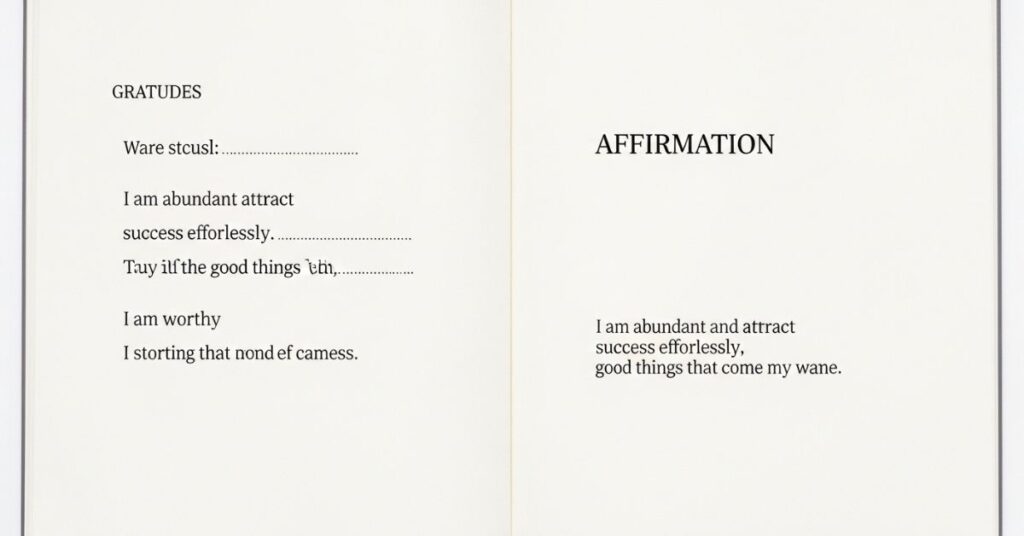
Keep the structure simple so it becomes sustainable.
Daily Template:
- Gratitude (3 things): Builds a positive baseline.
- Affirmation: One present-tense statement.
- Visualization/Scripting (1–2 paragraphs): Describe desired outcomes with sensory details.
- Action Step: One specific, doable task.
- Emotional Check-in: Rate your energy (1–10) and note what might improve it.
Weekly Review:
- Key wins (big and small)
- Lessons or patterns noticed
- Adjustments for next week
- 3–5 priority actions
Monthly Manifest Map:
- Top 3–5 intentions
- Habit tracking checkpoints
- 90-day overview
Sample Morning Entry: Gratitude: 1. A peaceful cup of tea this morning. 2. Support from my colleague yesterday. 3. My body’s ability to move and breathe. Affirmation: I am capable of making steady progress toward my goals. Visualization: I imagine myself finishing the project feeling calm and proud… Action Step: Spend 45 minutes on the first draft today. Energy: 6/10 – A short walk should help.
Adapt freely—make it personal.
High-Impact Manifestation Journal Prompts, Scripts & Affirmations

Prompts reduce blank-page anxiety.
For Clarity & Vision:
- What does an ideal day in this area of life look like in detail?
- Why is this goal meaningful to me?
- What small step feels exciting and realistic right now?
For Emotional Alignment & Gratitude:
- What evidence already shows I’m moving in a positive direction?
- How does it feel in my body when things go well?
Scripting Starters (present tense):
- “Today I feel grounded because…”
- “I am proud of myself for…”
Affirmation Examples:
- “I am building habits that support my well-being.”
- “I handle challenges with growing confidence.”
- “I make choices that align with my priorities.”
Rotate prompts to keep the practice fresh.
Techniques to Amplify Results: Visualization, Scripting & Rituals

Visualization: Spend 2–5 minutes imagining outcomes with sensory details. This can strengthen motivation by making goals feel more real.
Scripting: Write short “future self” entries or letters describing progress as if looking back. This supports belief and decision-making.
Rituals for Consistency: Link journaling to an existing habit (e.g., after coffee). Use a favorite pen, candle, or playlist as an anchor. Small cue-reward loops help.
Combine with simple habit trackers or a basic vision board for multi-sensory reinforcement.
Common Mistakes, Troubleshooting & How to Stay Consistent
Avoid impatience: Progress is often gradual. Track small wins to stay motivated. Realistic expectations prevent disappointment.
Language awareness: Focus on what you do want rather than what you don’t. Reframe negatives into actionable positives.
Writer’s block or low motivation: Start with one gratitude line or use voice-to-text. The 5-minute rule often creates momentum.
Consistency hacks:
- Habit stack (journal right after brushing teeth)
- Accountability buddy or group
- 30-day challenge with weekly reviews
Be kind to yourself on off days—just return to the page.

Author Note
Written by Templeton, a content creator and lifelong learner based in Alabama who explores practical mindset and productivity tools. I’ve tested these journaling methods in my own life for goal clarity and habit building, and I enjoy sharing what’s worked (and what hasn’t) with readers.
Conclusion
A manifestation journal is a flexible, practical system that supports mental clarity, emotional balance, and purposeful action. By using a simple structure, helpful prompts, and small rituals, you can strengthen focus and track real progress toward your goals.
Start small. Stay consistent. View your journal as both a mirror for honest reflection and a roadmap for forward movement.
Ready to Try a 7-Day Journal Challenge?
I’ve put together a free, simple daily template (gratitude, one affirmation, short scripting space, and one action step). You can download it by subscribing to my weekly practical mindset tips. Your email stays private, and I never spam—only send useful resources when I have something genuinely helpful. No pressure.
After your first week, feel free to share one win or insight in the comments below. I read every one and love cheering people on.
You’ve already taken a positive step by reading this far. Grab a notebook (or open a doc) and begin today. Your future self will appreciate the consistency.
FAQ – Manifestation Journal Questions
What is a manifestation journal?
It’s a structured journaling practice focused on clarifying goals, practicing gratitude, visualizing outcomes, and planning actions to support personal growth.
How long does it take to see results?
Many people notice improved mood and focus within 1–2 weeks of consistent gratitude practice. Deeper habit or goal progress usually takes 30–90 days of combined mindset work and action. Results depend on individual effort.
Do I need to believe in the Law of Attraction for this to work?
No. The techniques draw from evidence-based areas like goal setting, gratitude research, and expressive writing. You can benefit regardless of your beliefs about manifestation.
Is digital or paper journaling better?
Both work. Paper often feels more mindful; digital is convenient for templates and searching old entries. Choose what you’ll stick with.
What if I miss days?
No problem. Just return without self-judgment. Consistency over perfection is key.
Important Disclaimer: This article is for personal development and self-improvement purposes only. While techniques like gratitude journaling and goal writing have scientific support for improving focus, mood, and well-being, results vary from person to person and depend heavily on consistent real-world effort. There are no guarantees of specific outcomes such as financial success or life changes. Always combine mindset practices with practical action.
1 thought on “Manifestation Journal: How to Create a Powerful Manifestation Journal (+ Prompts, Templates & Routine)”