
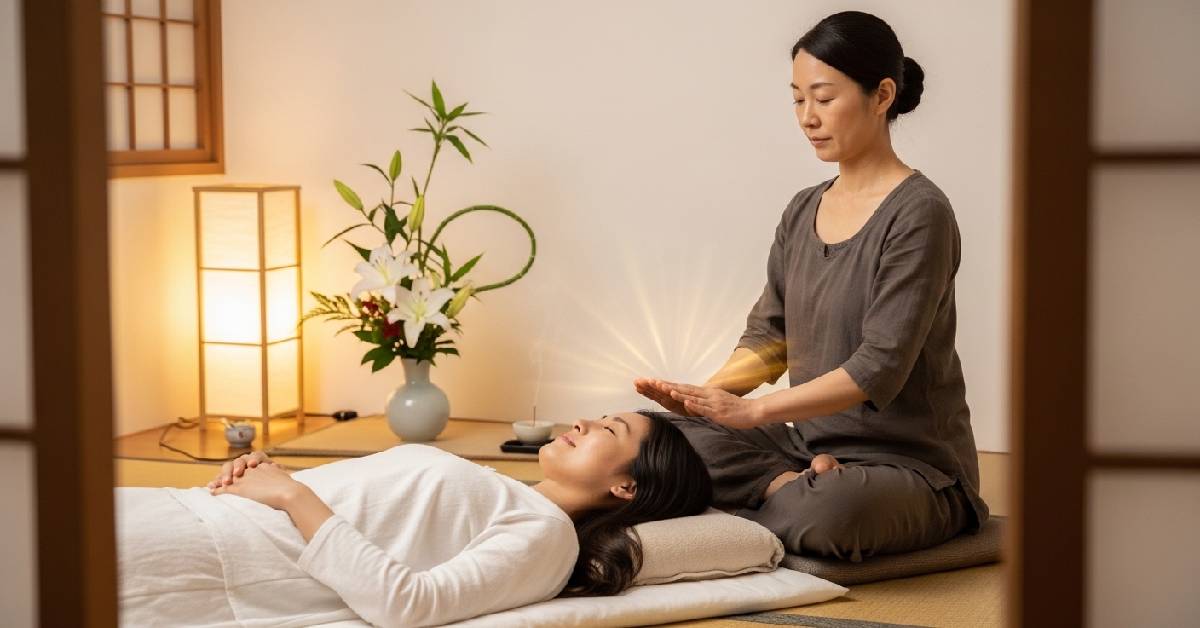
I still remember the first time someone mentioned Japanese energy healing to me. I was sitting in a café, stressed out of my mind, complaining to a friend about how nothing seemed to help with my constant fatigue and low-level anxiety. She said, “Have you ever tried Reiki?” I had no idea what she was talking about. Energy healing? Sounded a little out there, honestly. But I was also tired of feeling the way I felt. So I tried it.
That was twelve years ago. Since then, I have experienced Japanese energy healing from the client side, trained in Reiki, practiced on hundreds of people, and watched how this quiet, gentle work can shift things in ways that are hard to explain but impossible to ignore. This article is not a sales pitch. It is not a scientific paper. It is simply what I have learned along the way about Ki, about Reiki, about Shiatsu, and about how these traditions might offer something useful, even if you are skeptical.
My First Experience With Japanese Energy Healing (And Why I Almost Walked Out)
Let me be honest: my first Reiki session was weird.
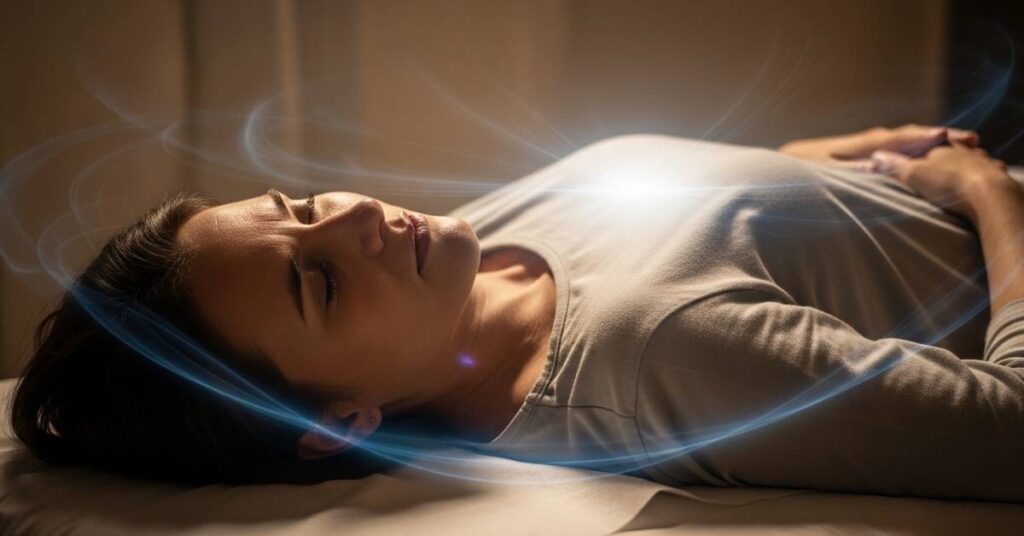
I lay down on a massage table in a dimly lit room. The practitioner, a calm woman named Yuki, told me to close my eyes and just breathe. She placed her hands lightly on my shoulders. I remember thinking, “Okay, this is fine. Just relaxing, I guess.”
Then she moved her hands to hover just above my stomach.
And I felt it.
Not heat, exactly. More like a gentle pulling sensation. Like someone was slowly unraveling a knot I did not even know I had. My eyes started watering. Not crying just watering. My stomach made a noise. My shoulders dropped about two inches without me telling them to.
Afterwards, I felt… light. Like I had been carrying a heavy backpack for months and finally set it down.
That was my introduction to what practitioners call Ki the life energy that Japanese energy healing traditions work with. I am not here to tell you that Ki is scientifically proven. What I can tell you is that something shifted in my body that day, and I wanted to understand what it was.
What Ki Actually Means in Japanese Energy Healing
You will hear a lot of spiritual language around Japanese energy healing. And look, that language exists for a reason. But if you are new to this, it can feel overwhelming or even off-putting.
So let me simplify.
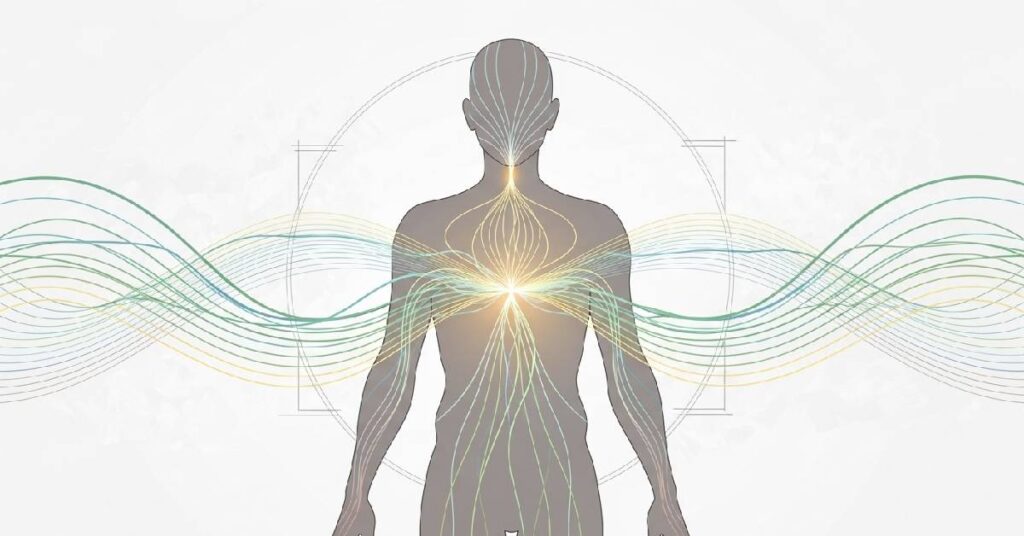
In traditional Japanese thought, Ki is just… life. It is the thing that makes you feel alive when you wake up well-rested. It is the energy that lets you get through a tough day without collapsing. It is also the thing that drains away when you are stressed, exhausted, or heartbroken.
Practitioners of Japanese energy healing believe that when Ki flows smoothly, you feel good. When it gets stuck, because of stress, trauma, or just life, you start to feel off. Maybe tired. Maybe anxious. Maybe physically achy in ways that do not make sense.
Reiki and Shiatsu are two different ways of helping that energy get moving again.
Neither one claims to cure disease. Neither one replaces a good doctor. But both can help create the conditions where your body and mind feel safe enough to start settling down.
Reiki: The Quiet Corner of Japanese Energy Healing
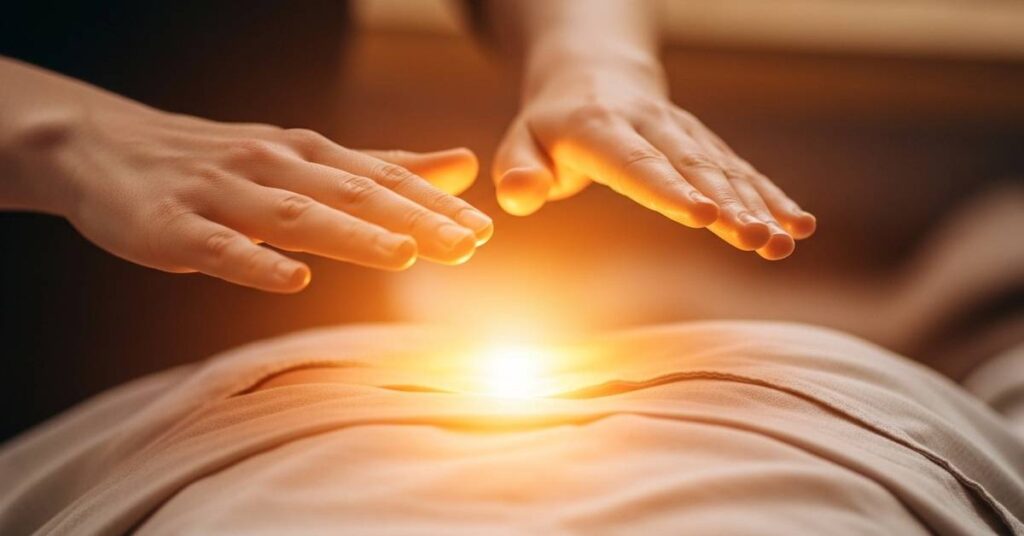
Reiki is the practice most people think of when they hear Japanese energy healing.
If you go for a Reiki session, here is what actually happens:
You lie down, fully clothed, on a table or a mat. The practitioner washes their hands (hygiene matters). They might ring a bell or do a short meditation to settle themselves. Then they place their hands on or above your body in a series of positions, head, shoulders, stomach, legs, feet.
That is it. No machines. No adjustments. No talking, usually.
What you might feel:
-
Warmth where their hands are
-
Tingling
-
A sense of your mind finally shutting up for a minute
-
Emotions surfacing unexpectedly (this is normal)
-
Falling asleep (also normal)
-
Nothing at all, and that is fine too
I have had clients who felt nothing during the session but woke up the next morning feeling like they had slept for a week. I have had clients who sobbed quietly for twenty minutes and then said, “I have no idea why I am crying but I feel better.”
Reiki does not force anything. It just creates space. Your body decides what to do with that space.
What Reiki Can and Cannot Do for Stress and Anxiety
I get asked this a lot. People come to me because their anxiety is running their life. They have tried medication, therapy, meditation, all helpful, but something is still missing.
Here is what I have observed over the years:
Reiki can help quiet the nervous system. When you are in a state of chronic stress, your body forgets how to relax. It stays in fight-or-flight mode, even when there is no threat. Reiki, by encouraging deep rest, can help remind your body what calm feels like.
I have seen clients with racing thoughts report that their mind finally slowed down after a session. I have seen people with insomnia fall asleep on my table and stay asleep through the night afterwards.
But Reiki is not a cure for clinical anxiety. It is not a substitute for therapy or medication. It works best alongside those things, as a support, not a replacement.
One client put it well: “Therapy helps me understand why I am anxious. Reiki helps my body stop being anxious. They do different things.”
Shiatsu: The Physical Side of Japanese Energy Healing
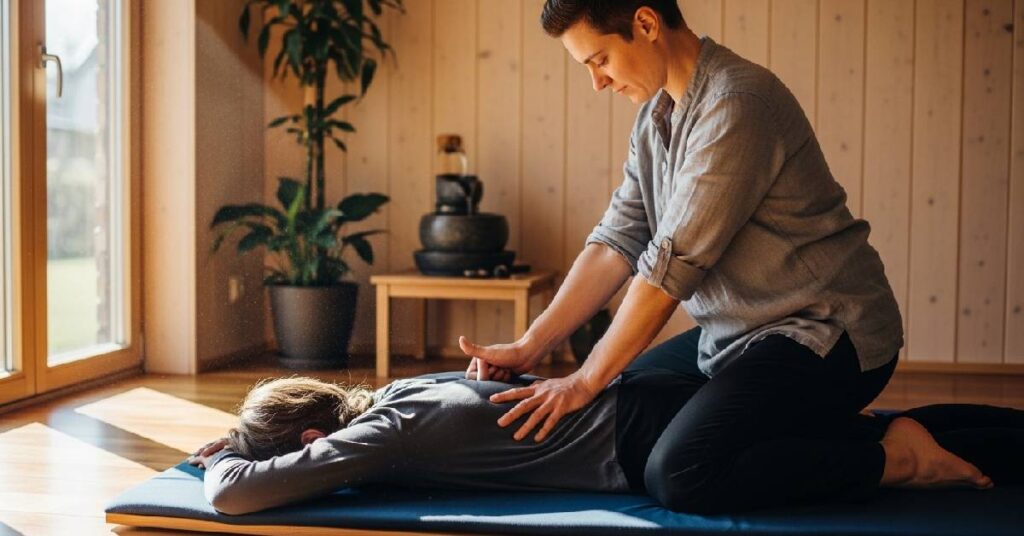
If Reiki is too subtle for you, Shiatsu might be more your speed.
Shiatsu is also rooted in Japanese energy healing, but it is physical. The practitioner uses their thumbs, fingers, palms, elbows, sometimes even knees, to apply pressure along the body’s energy pathways.
It can feel like a deep massage, but the focus is not just on muscles. The goal is to stimulate Ki flow by working on specific points.
I had a client who came to me with chronic shoulder tension. She had tried everything, massage, chiropractic, acupuncture. Nothing lasted more than a day or two. She came for Reiki first, and while it helped her relax, the shoulder tightness did not budge.
So I suggested Shiatsu.
During the session, I found a spot near her shoulder blade that was rock hard. I applied pressure there for maybe a minute. She made a sound like “ohhh” and her whole upper body seemed to let go.
Afterwards, she said, “I did not even know I was holding that.”
That is Shiatsu. It finds the places where your body has been bracing against life and gives them permission to release.
Reiki vs. Shiatsu: Choosing Your Path in Japanese Energy Healing
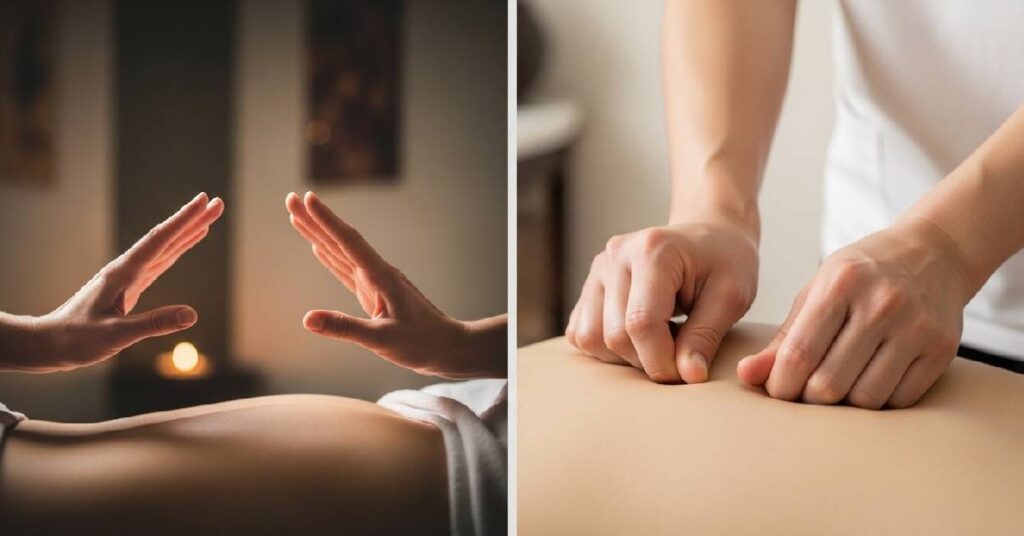
I get this question constantly. Here is how I usually answer:
| Reiki | Shiatsu | |
|---|---|---|
| What it feels like | Still, quiet, like being held | Active, like deep pressure or stretching |
| Best for | Stress, emotional stuff, insomnia | Physical tension, aches, stiffness |
| You stay | Fully clothed, lying still | Fully clothed, moving as needed |
| Afterwards | Spacey, calm, often sleepy | Grounded, loose, sometimes sore |
Honestly? You do not have to choose. I know plenty of people who use Reiki for emotional balance and Shiatsu for physical maintenance. Both are valid forms of Japanese energy healing, and they work well together.
Learning to Practice Japanese Energy Healing Yourself
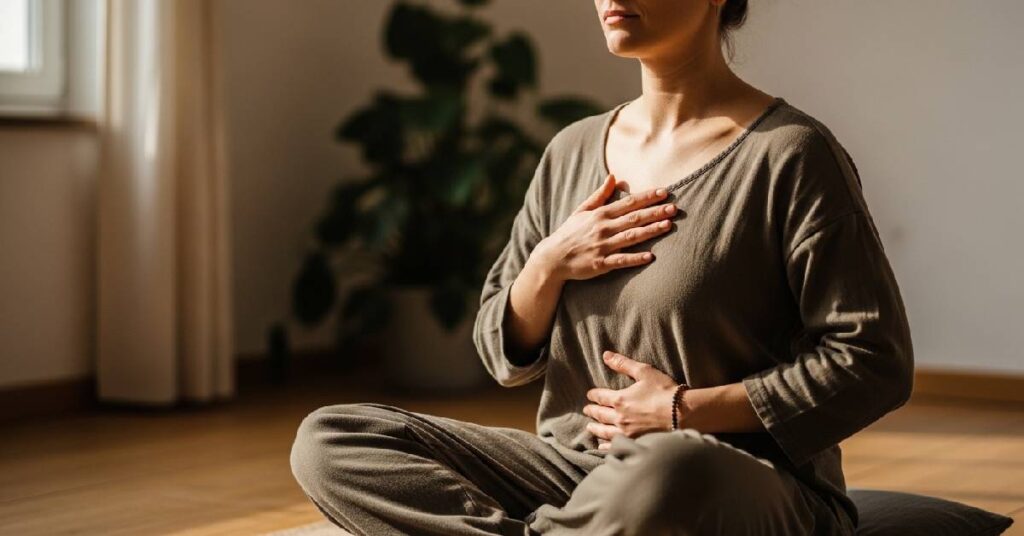
You do not have to find a practitioner to benefit from Japanese energy healing. A lot of the value comes from learning to work with your own energy.
Here is how I started:
After my first Reiki session, I signed up for a Level I class. It was one weekend. I learned the hand positions, got my first attunement (which is a ceremony that opens your energy channels), and practiced on myself every day for three weeks.
The attunement part might sound woo-woo. Honestly, it kind of is. But here is what I noticed: after that weekend, my hands started feeling warm when I put them on my stomach at night. I started sleeping better. I started being able to tell when I was running low on energy before I crashed.
Learning Reiki is not complicated. There are three levels:
-
Level I: You learn to practice on yourself and others in person
-
Level II: You learn symbols and how to send energy across distance
-
Master Level: You learn to teach and attune others
Most people stop at Level II. That is plenty for personal practice.
If you want to start without taking a class, try this:
Sit somewhere quiet. Put one hand on your chest, one on your belly. Close your eyes. Breathe slowly. Just notice what you feel. That is it. That is the foundation of working with energy.
Does Distance Japanese Energy Healing Actually Work?
I know. This one sounds like magic.
Distance Reiki is when a practitioner sends energy to someone who is not in the same room. Maybe across town. Maybe across the world.
I was skeptical about this for a long time. Then I had an experience that changed my mind.
A friend of mine was going through surgery. I asked if I could send her distance Reiki. She said yes. During the time I was practicing, she texted me: “Something just shifted. I feel so much calmer.”
Was that the Reiki? Placebo? Coincidence? I honestly do not know.
What I do know is that intention matters. And whether the mechanism is quantum physics (as some people suggest) or simply focused care, distance sessions seem to help people relax.
If you are curious, try it. Find a practitioner who offers distance sessions. See what happens. Worst case, you spend an hour resting quietly at home. That is not a loss.
What the Research Says About Japanese Energy Healing
I am not a scientist. But over the years, I have kept an eye on the research because people ask about it.
Here is the honest summary:
-
Studies show that Reiki is associated with reductions in pain, anxiety, and stress
-
A 2023 review in the Journal of Integrative and Complementary Medicine found consistent positive effects across multiple studies
-
Major hospitals, including the Cleveland Clinic, offer Reiki as a complementary service
What the research does not do is prove that Ki exists. It does not explain how energy healing works in a way that satisfies skeptical scientists.
For me, that is fine. I do not need to know exactly how my phone works to use it. I do not need to know exactly how Reiki works to see that it helps people feel better.
A Story That Stays With Me
I want to tell you about a client I will call Maria.
Maria came to me after her father died. She was not sleeping. She was snapping at her kids. She felt like she was drowning.
During her first session, she lay on the table and cried. Not sobbing, just silent tears running down her face. I did not say anything. I just kept my hands where they were.
Afterwards, she said, “I have not cried since the funeral. I thought I was fine. I guess I was not.”
We met weekly for two months. Slowly, the crying stopped. The sleep got better. She started talking about her father with warmth instead of numbness.
Eventually she said, “I do not know what you are doing, but I feel like I can breathe again.”
I told her the truth: I was not doing anything. I was just holding space. Her own body did the rest.
That is what Japanese energy healing looks like in real life. It is not dramatic. It is not a miracle. It is just… helping people remember what it feels like to be okay.
How to Start With Japanese Energy Healing (If You Want To)
If you are curious about Japanese energy healing, here is how I would start:
-
Find a practitioner. Look for someone with good reviews. Ask them questions. See if they feel trustworthy to you.
-
Try one session. Go in with an open mind. Do not expect anything specific. Just see what happens.
-
Pay attention to how you feel afterwards. Not just that day, but the next few days. Sometimes the shifts show up later.
-
If you like it, consider learning. A Level I Reiki class is not expensive. You learn something you can use for the rest of your life.
-
Be patient. Energy work is subtle. It is not like taking a pill and feeling different in an hour. It builds over time.
A Few Things to Watch Out For
Not everyone offering Japanese energy healing is ethical or skilled. Here are some red flags:
-
Someone who claims they can cure your disease
-
Someone who pressures you to book multiple expensive sessions upfront
-
Someone who makes you feel uncomfortable or touches you in ways you did not agree to
-
Someone who discourages you from seeing a medical doctor
Good practitioners will:
-
Respect your boundaries
-
Explain what they are doing
-
Encourage you to maintain your regular medical care
-
Never promise specific outcomes
Final Thoughts on Japanese Energy Healing
I have been practicing and experiencing Japanese energy healing for over a decade now. I still do not fully understand how it works. I still have moments of skepticism. I still roll my eyes at some of the more out-there claims I hear in the wellness world.
But I also still practice. Because I have seen too many people, myself included benefit from it to dismiss it entirely.
If you are struggling with stress, anxiety, fatigue, or just that vague sense of being “off,” maybe give it a try. Not because it is a magic solution. But because sometimes, the simple act of lying still while someone holds space for you is enough to remind your body how to rest.
And rest, honestly, is where most healing starts.
Frequently Asked Questions
1. Is Japanese energy healing religious?
No. Reiki and Shiatsu are spiritual in the sense that they work with life energy, but they are not tied to any particular religion. People from all backgrounds practice and receive them.
2. How many Reiki sessions do I need?
It depends. Some people feel better after one session. Others come weekly for a few months. It is really about what your body needs and what feels sustainable for you.
3. Can Reiki help with anxiety?
Many people find it helps. The deep relaxation can calm the nervous system and quiet racing thoughts. But if you have severe anxiety, please work with a mental health professional as well.
4. What should I wear to a session?
Anything comfortable. You stay fully clothed for both Reiki and Shiatsu. Avoid tight jeans or belts if possible.
5. Is there any risk?
These practices are very low-risk. Some people feel emotional during or after a session, which can be intense but is usually temporary. If you have a serious medical condition, talk to your doctor first.
Disclaimer: The information in this article is for educational and informational purposes only and is not intended as medical advice. It is not a substitute for professional medical diagnosis, treatment, or care. Always consult with a qualified healthcare provider for any health concerns or before starting a new wellness regimen.
References
-
Cleveland Clinic. (n.d.). Reiki. Retrieved from my.clevelandclinic.org
-
National Center for Complementary and Integrative Health. (2023). Reiki. nccih.nih.gov
-
Baldwin, A. L., & Rand, W. L. (2021). Massage and Reiki for Pain and Anxiety: A Review of the Evidence. Journal of Integrative and Complementary Medicine.
-
World Health Organization. (2023). Stress management.